


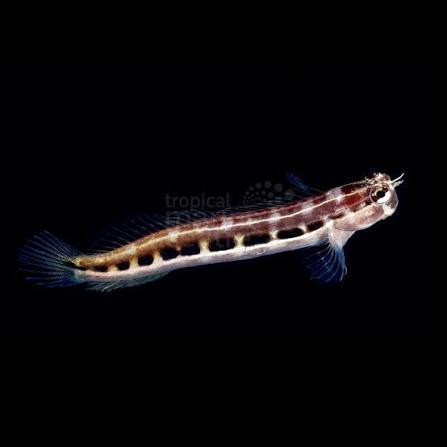
The Dot Dash Blenny (Ecsenius lineatus) is a fascinating and characterful marine fish, admired for its distinctive lined markings, expressive eyes and entertaining personality. Growing to around 9 cm, this attractive blenny is an excellent choice for established marine aquariums and can make a wonderful addition to many reef setups.
Dot Dash Blenny Care Requirements
Dot Dash Blennies originate from the Indo-West Pacific, where they inhabit shallow coral reefs and rocky coastal areas. In captivity, they thrive in a mature aquarium with plenty of live rock, natural algae growth, caves and crevices for hiding and perching.
An aquarium of around 80–150 litres or larger is a sensible starting point, depending on tank dimensions and tank mates. Maintain a stable temperature of 23–27°C, a salinity of 1.020–1.025 specific gravity and a pH of 8.1–8.4. A secure aquarium lid is recommended because these fish can jump.
Feeding Your Dot Dash Blenny
This species is primarily herbivorous and enjoys grazing on microalgae growing naturally on live rock. Supplement its diet with nori seaweed, algae-based flakes, marine algae wafers and suitable foods containing spirulina. Some individuals will also accept frozen foods enriched with marine algae.
Regular feeding is important, as an aquarium with insufficient natural algae may not provide enough nutrition.
Compatibility and Behaviour
Dot Dash Blennies are generally peaceful towards many other marine fish but may become territorial towards their own species, similar-looking blennies and small, peaceful bottom-dwelling fish. Keeping a single specimen is usually the safest option unless a compatible pair is established.
They are generally considered reef compatible, although occasional individuals may nip at certain corals, particularly when underfed. Monitor their behaviour in coral aquariums.
Add a Dot Dash Blenny to Your Aquarium
With its attractive markings, manageable size and engaging behaviour, the Dot Dash Blenny is a rewarding addition to a suitable established marine aquarium. Provide plenty of live rock, a varied algae-rich diet and stable water conditions to help keep this distinctive fish healthy and thriving.



Reviews
There are no reviews yet.